50 Degrees Fahrenheit in January in Minnesota!?

0

Posted by Sara | Posted in Outdoor Gardening | Posted on 10-01-2012

If you haven’t heard, here in Minnesota we are experiencing some seriously warm weather for this time of year. Last week and this week typically being our coldest weeks of the entire month temperatures have reached the 40’s more than a few times and as I type this to you now it is 50 degrees!

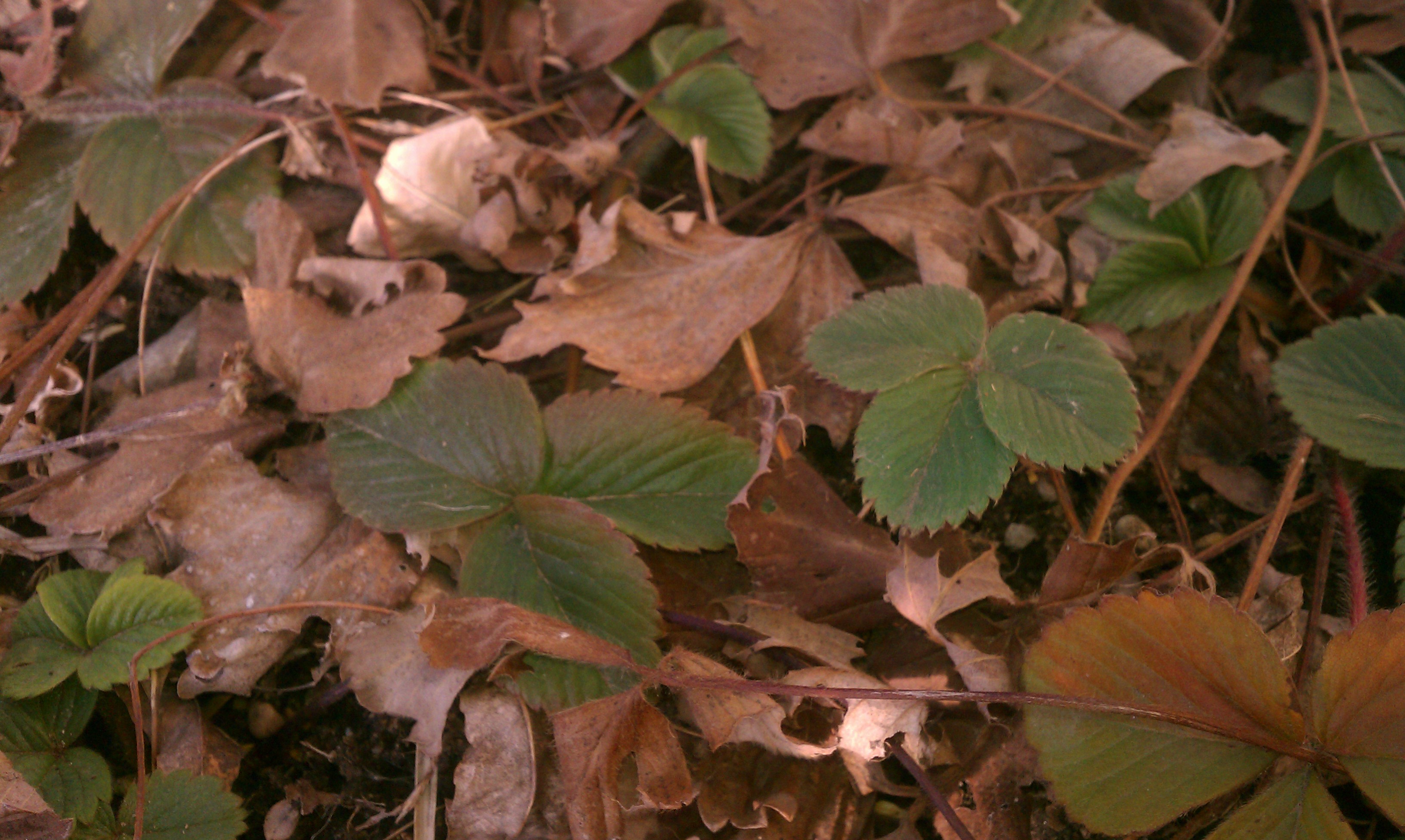
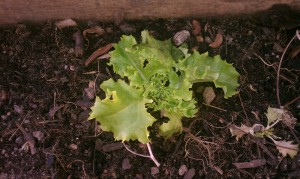
I had to go out to the garden to show you what’s happening out there. Things are ALIVE and growing. Albeit slowly my salad greens, strawberries, onions and carrots are alive and growing right now in the middle of winter.

Keep in mind when you read this that last year these same beds were under a few FEET of snow, and it was so cold you could not breath well without something covering your mouth. I did not tend these beds or intend for these plants to be well now. I just went out to see if anything was happening after seeing that a friend of mine harvested salad greens after Christmas! (Needless to say, I will be starting salad and radish seeds inside now and covering these beds just to see if I can get a pre-Spring harvest!!)

New baby strawberry plants green and soft. Uncovered, in ground.

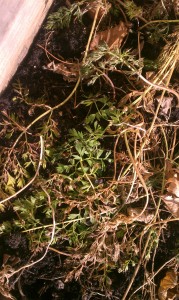
Carrots still green in January - uncovered raised bed.

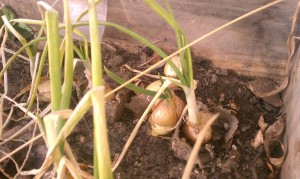
Onions growing in January 2012 - semi-covered raised bed.

Lettuce in January 2012!! Semi-covered raised bed.

Winter Greenhouses!

0

Posted by Sara | Posted in Conservation, In The Greenhouse, Indoor Gardening, Outdoor Gardening | Posted on 04-01-2012

I’ve been out of touch recently, but I’m back in 2012 with new inspiration!

I have found a few great resources about winter gardening in Minnesota! Can you believe other people are as crazy as I am? πŸ™‚

After my little plastic greenhouse got ripped apart by all the wind we’ve been having this Fall/Winter I was inspired to look into building a permanent structure. I went to my local building store and looked at their shed kits/structures and greenhouse poly/plastic sheeting and corrugated sheet metal and recycled material. It was very exciting and totally do-able.

But NOW; An even better solution has come into focus from a link shared on facebook. (Thank you Lara!!!!) A couple in Minnesota started a solar powered organic winter greenhouse. It grew into a winter CSA which now provides organic veggies to 18 families all winter long!!!

What’s more is that they are very nice, and will support anyone who wants to try to do what they did, AND they wrote a book all about it. What better way to pass this winter than learning how to garden year-round starting this Spring??

The book is titled, Northlands Winter Greenhouse Manual, by Carol Ford.

While searching for this book I also found, The Winter Harvest Handbook, by Eliot Coleman.

Both are about sustainable organic winter greenhouse gardening. Watch for more posts as I read and review these books and start planning my permanent greenhouse project this Spring.

I could not be more excited and I am so grateful that I found these books/resources before I went ahead and started my own pioneering project with this. I will be leaps and bounds ahead of where I would have started out with all this.

Who wants to by in my Winter CSA??? πŸ™‚ (I am only half kidding.)

How to Get Rid of Powdery Mildew

0

Posted by Sara | Posted in Outdoor Gardening, Pests and Problems | Posted on 27-09-2011

Tags: , , , , , ,

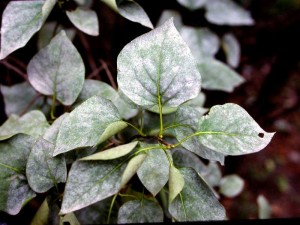
Powdery mildew peaks in the fall when temperatures are cooler, the sun’s heat and light is more moderate and less direct, and humidity is still high. The amount of dew that forms during the fall is a lot more than in summer months due to the temperature crossing the dew point at a very low place. This happens in the dark, and we all know fungi love dark and wet so, Fall is it for the fungus to go nuts!

Plants with large broad leaves are susceptible. Such as lilac bushes, roses, cabbage, and broccoli.

There are a few organic methods of protecting against powdery mildew. Here are a few:

  1. Make a spray with water and baking soda and spray plants early in the day (***on an over-cast day so that this recipe doesn’t burn your foliage***) so that the leaves are dry before the cool night temperatures come. Here’s a good recipe:
    • 1 gallon of water
    • 1 tablespoon of baking soda
    • 1 tablespoon of vegetable oil
    • 1 tablespoon of dishwashing liquid

    This will protect the parts of your plant that have not been infested yet and is preventative only.

  2. Neem Oil – apply 70% Neem Oil in mid-summer to prevent, once weekly. If you see some powdery mildew you can start applying it then.
  3. Spraying your foliage with tap water from the garden hose at a medium to hard pressure. Summer rains/storms and wind plus direct sunlight keep the powdery mildew from forming in the summer months. So you can re-create some of that in the Fall by spraying plants. Make sure you do this in the morning so the plants are dry by night fall.

You will see a white film coating the top of the leaf. It will be very transparent at first, but as it takes hold it will become more white and apparent. Start treating the plant with one or more methods above immediately in order to save the plant.

Once powdery mildew is present you cannot effectively get rid of it with organic methods. You must remove that part of the plant and GET RID OF IT completely. DO NOT COMPOST! Toss it in the trash! If a large portion of the plant is covered your best bet to contain it, and save other plants from this fungus is to uproot it completely and get it off your property as soon as possible.

This fungus can over-winter in your plant and come back stronger as soon as conditions allow it to start replicating again! Horrible stuff!!!

My 3 year old lilac bush got it last year and I treated it with a baking soda spray. It stopped it from spreading but it had already covered many leaves which were turning yellow and dropping off! I did not know it could survive the winter and come back again or damage the internal plant. The next season the leaves were all strangely shaped and it did not flower. So, I chopped it down to the ground in the hope that some part (the strongest part) would survive and come back as a new baby lilac plant. (I’ll let you know how that goes in the Spring of 2012!)

Good luck with your Fall clean up! It’s time to start your herb seeds indoors if you want nice organic herbs at your finger tips all winter long! You saved some seeds from your cilantro, basil, oregano and thyme plants right?? πŸ™‚

Green Tomato Salsa Recipe

0

Posted by Sara | Posted in Outdoor Gardening, Recipes | Posted on 17-09-2011

Tags: , , ,

For those of you wondering what the heck to do with all the green tomatoes you harvested look no further! If your counter is cluttered with tons of green tomatoes because you had a recent frost warning this is a great way to use them up!

Green tomato salsa by the quart
Ingredients Directions
  • 4-6 firm green tomatoes
For other amazing green tomato recipes please visit http://www.bostonplus.com/tomato.htmlCombine the green tomatoes, onion, chili peppers, garlic, salt, cumin, olive oil, and water in a large pot. Bring to a boil and cook covered on a medium-low heat for ten minutes, stirring occasionally. Add more water only if needed to maintain the most minimal broth.


Stir in and simmer for an additional five minutes the lemon zest, lemon juice, sugar, and cilantro. Taste the mixture and adjust the seasoning, if needed, by adding more lemon juice, honey, and/or salt, to taste.


Spoon the mixture (in batches if necessary) into the container of a food processor or blender and pulse until the salsa reaches the consistency you prefer.


Label your freezer bags and fill them half full and freeze. Should make 4-6 half full sandwich bags.

  • 1 onion
  • 1 medium heat pepper (Anaheim)
  • 1-3 Jalapeno peppers
  • 3 Cloves Chopped Garlic
  • 1 tsp Salt
  • ΒΌ tsp Ground Cumin
  • 1 TBSP Olive Oil
  • 3 TBSP Water
  • Β½ tsp Fresh Lemon Zest
  • 1 TBSP Lemon Juice
  • 1 tsp Sugar
  • 1/3 Cup Cilantro
  • Sandwich Size Freezer Bags


Looking for more awesome Harvest Recipes? Check out my recent book for free here!

Water Your Garden To Protect It From Frost

0

Posted by Sara | Posted in Outdoor Gardening, Pests and Problems | Posted on 17-09-2011

Tags: , , , ,

Watering your garden when there might be a frost seems a little backward, but it will protect your plants.

A healthy well-watered plant will do better than a weaker, drier plant will in cooler night time temperatures. You don’t want the plant to be wet, but you want the Earth to be nice and damp when nightfall comes.

All of the processes that the plant uses to take in water and create food for it’s self take energy. When the plant uses it’s energy to take water and create food it releases a small amount of heat. So a plant that is undergoing this process is slightly warmer inside than a plant that is sitting there doing nothing but drying out.

So water your garden early in the day, and allow the plant’s leaves to be dry by nightfall and you should have some added protection against cooler nighttime temperatures.

Happy Autumn!

Sara

What To Harvest When Frost Is Coming

0

Posted by Sara | Posted in Outdoor Gardening, Seed Saving | Posted on 16-09-2011

Tags: ,

When a frost is coming it is important to know which vegetables to harvest first and how to get the most out of your garden at the end of the season, or try to extend it further into the season.

Warm-weather vegetables should be considered first. If frost is a “maybe” you can harvest all the food, and then try covering the plant to save it. If frost is “for sure” you can harvest the food and then in certain cases there are things you can do to still get the vegetables to ripen on the vine, or to get the seeds from the plant even though the vegetables are still immature.

Here is a list of vegetables that will go very quickly in even a light frost:

  • Basil (especially sensitive)
  • Cilantro
  • Tomatoes
  • Squash
  • Peppers

For each of these you want to harvest ALL the usable plant and vegetables.

If you have all green tomatoes and you were hoping to save seed (which should be taken from 100% ripe fruit) uproot the entire plant and find somewhere to hang it. The plant will die but the tomatoes should still ripen (better and faster than on your counter but that will work too) and you can gather the seeds after they turn red.

To save seed from cilantro and basil if it isn’t ready yet: If there are seeds but they are still green uproot the entire plant and hang upside down until the seeds turn brown and very dry for cilantro and black for basil. You can then save the seeds for next year.

Vegetable plants that might survive, or at least do a little better in a light frost:

  • Peas
  • Lettuces and Cabbages including Broccoli
  • Carrots
  • Onions, and other leeks like Fennel
  • Certain kinds of green beans/beans

Carrots and onions can even be left for next season and will just start right up growing again next year if you simply leave them in the ground.

Happy Harvesting!!!

-Sara

For more helpful information about all kinds of vegetables check out my Seed-To-Seed Book Club. Get a free gardening book in your email each month for a year!

Minnesota Under a Frost Warning

1

Posted by Sara | Posted in In The Greenhouse, Outdoor Garden Progression, Outdoor Gardening | Posted on 15-09-2011

Tags: , , , ,

Parts of Minnesota are under a frost warning tonight.

Here’s what you can do to protect your plants:

  • Cover warm weather plants like tomatoes, peppers and squash with bed sheets.
  • Water your garden early in the day. You want the plant to be dry when night comes, but you also want the ground to be moist and the plant to be well watered.
  • Build a PVC structure and put clear plastic sheeting over it making a greenhouse right over your plants!
  • Pot up plants and put inside or in your greenhouse.
  • If all other options are not possible harvest every vegetable you can and hope for the best!

I have done 4 of the above. I watered early this morning and all my plants are now dry, and well watered. I spent most of the day making pesto from my basil and freezing it. Basil is especially vulnerable to frost damage. I also harvested every descent sized tomato regardless of color. I make 2 quarts of salsa and froze that too. I potted 2 tomato plants and put them in the greenhouse. I also covered another tomato plant, my eggplant, and one bell pepper plant with bed sheets.

Now all we do is wait and see. It is QUITE cold out there compared to 4 days ago when it was in the 90’s!!

Talk to you in the morning. I would love to hear how everything looked in the morning for you all! Post something in the forum for it.

Sara Murray

Harvesting Before The Frost

0

Posted by Sara | Posted in Outdoor Gardening | Posted on 14-09-2011

Tags: , , ,

How to harvest and what to do with all those vegetables when your area gets a frost warning.

We have our first frost warning of the season tonight in Minnesota. It’s supposed to get down to 35 degrees Fahrenheit with scattered frost. Some vegetables can withstand a light frost; beans, peas, onions, and carrots will all be fine. However, there are plenty of plants that will turn to mush at the first sign of frost; basil, tomatoes, and squash probably won’t survive.

One thing you can do is build a structure around the plants you want to save and cover it with greenhouse plastic, or buy some frost cloth and cover the plants overnight when it gets down to the coldest temperature of the day.

The other chore to do when frost is on the horizon is harvest the vegetables from the garden and start cooking, canning and freezing.

Here is my chore list for today: Harvesting all Tomatoes, Peppers, Cilantro and Basil and how I cook or freeze it for the winter.

  • Harvest ALL Basil and make pesto, freeze in batches for later.
  • Harvest all Tomatoes except super green ones to ripen on the counter top.
  • Harvest all ripe Tomatoes and Cilantro and make into salsa and freeze.
  • With extra Tomatoes cut off stems, place on cookie sheet and put in the oven at 375 for 10 minutes, let cool and peel. Then you can place the entire peeled tomato(es) in freezer bags and freeze for later.
  • Harvest all green beans, cook lightly and freeze.
  • Harvest all peppers and either peel like the tomatoes and freeze or freeze whole. Red bell peppers I peel and freeze, green bell and jalapeno I just put in freezer bags raw and whole.

Happy harvesting, cooking and freezing.

Frost…

0

Posted by Sara | Posted in Outdoor Garden Progression, Outdoor Gardening, Pests and Problems | Posted on 07-09-2011

Tags: , , ,

So, the time has come to discuss the issue of frost and how we (in the North) are going to extend this season and try to get our tomatoes to ripen on the vine!!

Last year I tried to create a greenhouse with greenhouse plastic, PVC pipe and packing tape around my entire garden. It was working great until a wind storm in early October when it all came crashing down and had to be taken down and off of the garden.

This year I plant to eventually pot up the tomato plants that are doing well and put them in the greenhouse! (The actual greenhouse that I bought in the early Spring.) But before I need to do that there are plenty of warm days left. When day-time temps get below 55 I will move them to the greenhouse. Over night temps are sometimes dipping into the 40’s now though.

So, I am going to go to my local hardware store and get some frost cloth. I have my tomatoes on very tall stakes, and I am going to get a few more that are even taller. I will drape the frost cloth over the stakes and hope for the best!! (Pictures coming soon.)

Wish me luck – I still have several dozen tomatoes in the garden, as well as jalapeno and bell peppers, and 4 lovely eggplants I need to save!

Back To The Cold Weather Veggies!

0

Posted by Sara | Posted in In The Greenhouse, Outdoor Garden Progression, Outdoor Gardening | Posted on 01-09-2011

Tags: , , ,

The only difference between gardening in the early Spring and gardening in the Fall are the mosquitoes!!

So I cleaned out my raised beds and planted the cold weather vegetables again. The warmer vegetables like tomatoes, peppers, squashes will all need a frost blanket. But the salad greens like spinach, kale, and arugula will all do really well again! Even radishes will get another batch once it gets really cold.

So in May I took the plastic that I had over my raised beds and rolled it off and stored in on the side of each bed. I am guessing I will get another few weeks and then I might have to put it over during the night time hours. I want to keep those salad greens above 45 degrees Fahrenheit. We had one night time temp of 55 last week already!! It went back up, but Minnesota is known for it’s temperature swings.

So, backward we go into Fall and Winter. Thinking about greenhouse, and plastic and frost blankets. πŸ™‚

Tell us what you’re doing this Fall to prepare your garden for the winter in the forum!

Thanks for stopping by,

Sara